MISSION STATEMENT:
Ocular health is invaluable. Our aim is to improve quality of life through the ethical and safe trialing of new and innovative products/devices produced from bio-tech/pharmacutical companies. Assisting them in their fight against ocular diseases.

WHO WE ARE:
Welcome to Ophthalmic Trials Australia
Ophthalmic Trials Australia (OTA) is one of Australia’s leading private ophthalmic clinical research sites, with particular expertise in anterior eye disease and Phase I, II and III clinical trials.
OTA has evolved from more than two decades of clinical optometry and specialist anterior eye care through Mark Hinds Optometrists, combined with many years of dedicated clinical trial experience across investigational pharmaceuticals, biologics, devices and other ophthalmic technologies.
Our clinical and research focus has placed OTA at the forefront of studies involving dry eye disease, ocular surface disease, ocular pain, corneal disease, keratoconus, glaucoma and other anterior segment conditions. Our team has extensive experience delivering early-phase and proof-of-concept research, including first-in-human and Phase I programs, through to Phase II and Phase III clinical development.
The strength of OTA lies not only in its clinical trial infrastructure, but also in the depth of its multidisciplinary team. Our investigators and clinical staff include subspecialist ophthalmologists, medical practitioners, ophthalmology registrars, nurses and highly experienced optometrists, bringing together complementary expertise across ophthalmic disease, clinical assessment, study conduct and patient management.
Our investigators also contribute beyond site-based trial delivery. Members of the OTA team sit on multiple scientific advisory boards and have extensive experience contributing to clinical trial design, protocol development, study construct, endpoint selection and broader clinical development strategy. This involvement extends into early commercial and translational discussions, including engagement with biotechnology companies, industry stakeholders and venture capital groups considering the clinical and commercial development of emerging ophthalmic technologies.
This combination of long-standing clinical practice and dedicated research infrastructure gives OTA direct access to a highly characterised and continually expanding database of more than 35,000 patients. Developed over decades of clinical care, professional networking and referral relationships, this patient population represents a broad range of ages, ethnicities, genetic backgrounds, disease phenotypes and lifestyles.
Our established collaboration with both private and public ophthalmology further extends our clinical reach and provides access to specialist expertise, referral pathways and diverse patient populations across a wide spectrum of ophthalmic disease.
OTA also maintains strong working relationships with leading ophthalmology-focused and global clinical research organisations (CROs). These relationships, together with our experience working directly with biotechnology, pharmaceutical and medical-device companies, allow our team to integrate efficiently with sponsors, medical monitors, project managers, data-management teams and international clinical operations groups throughout the development pathway.
At the centre of OTA is a commitment to conducting high-quality, rigorous, ethical and efficient clinical research. Our objective is to help sponsors safely and effectively progress innovative investigational therapies, devices and technologies from early clinical development through later-phase evaluation and, ultimately, toward clinical use.
Our research history includes ongoing collaborations with industry, academic institutions, clinicians and research partners, together with contributions to scientific presentations and peer-reviewed publications. Just as importantly, many sponsors and research partners have returned to OTA with subsequent programs, reflecting the strength of the working relationships, recruitment capability, clinical expertise and trial delivery developed by our team.
Over the years, we have built a valued international network of sponsors, CROs, investigators, scientific advisers and collaborators united by a common objective: to advance ophthalmic research, protect sight and improve quality of life for patients with eye disease.
We welcome opportunities to collaborate with organisations developing the next generation of ophthalmic therapeutics, devices and technologies.
WHAT WE DO & RECENT PUBLICATIONS
Our clinical trial program facilitates the new and leading treatments for patients to improve clinical outcomes and patient quality of life.
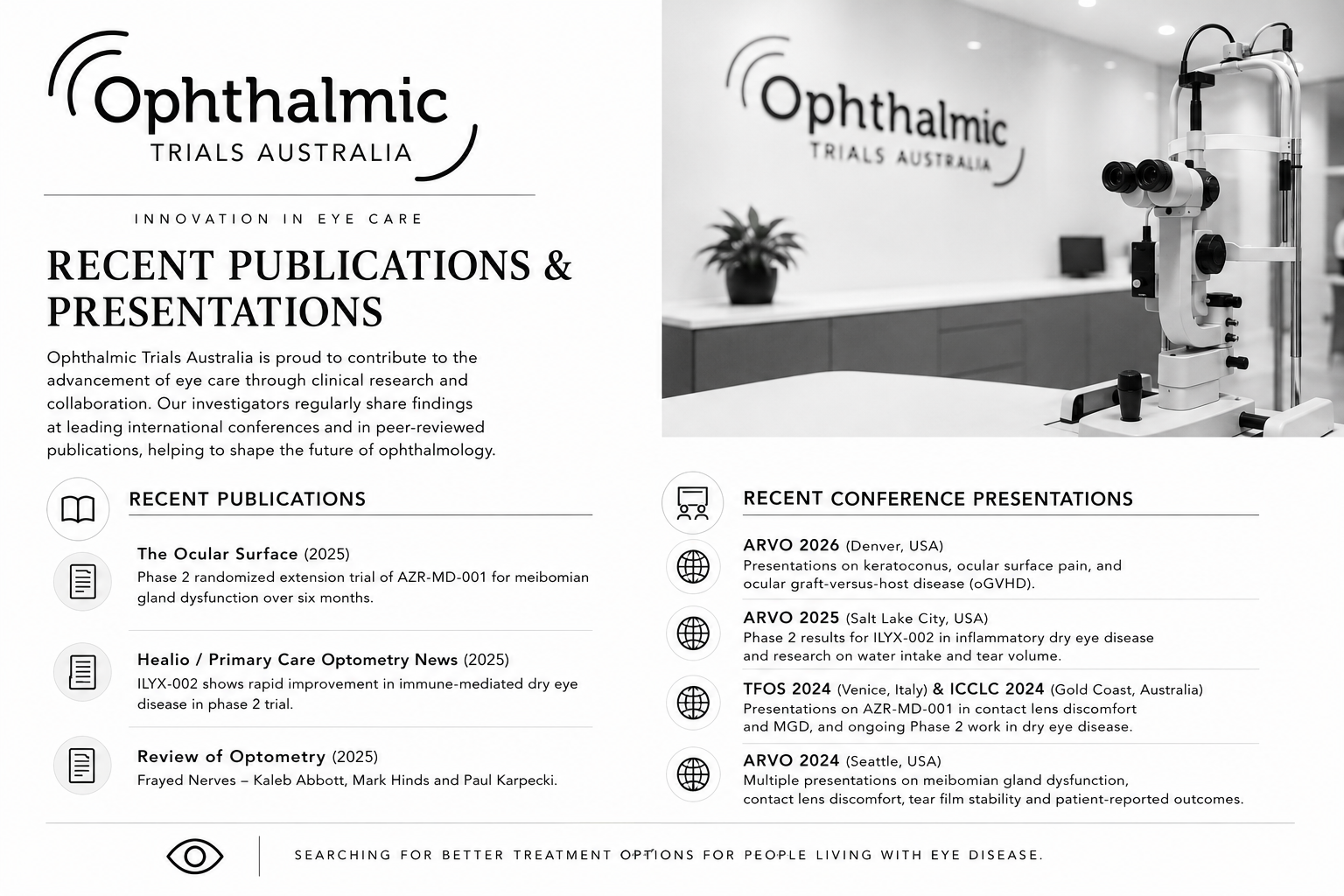
Evidenced based medicine requires diligent and safe assessment of findings through Clinical Trials. Ophthalmic Trials Australia’s research is intent on improving the current treatments (or lack their of) for ophthalmic diseases. With a focus on the anterior segment of the eye, we specialise in Clinical trials that focus on Dry Eye Disease, Chronic Ocular Surface Pain & Ocular Graft-Versus-Hosts Disease (etc.). Dr Mark Hinds and his team has developed Ophthalmic Trials Australia to push for innovative treatments and raise awareness of such diseases.
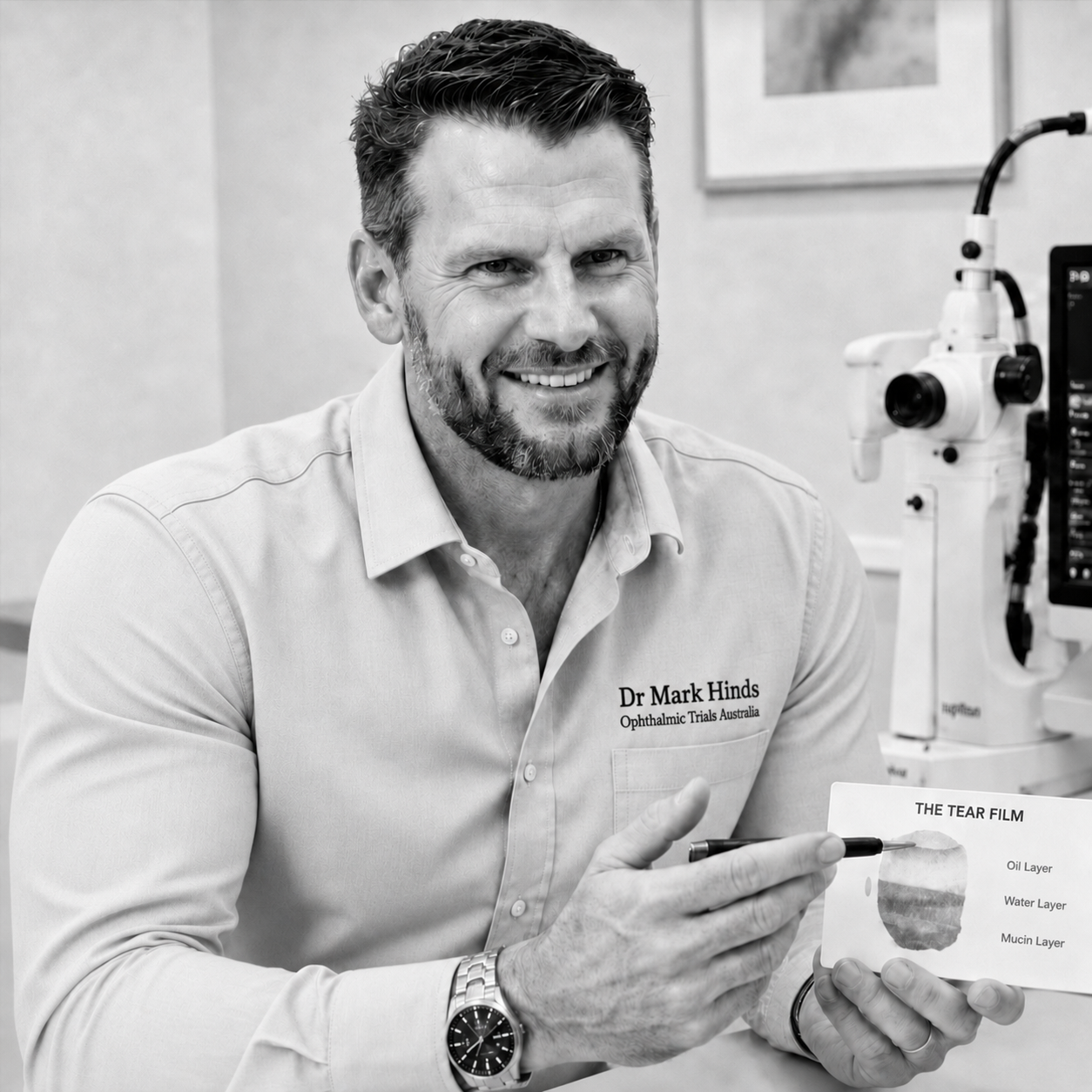
Meet one of our lead investigators.
Dr Mark Hinds
BScApp(Optom) (Queensland University of Technology)
GradCertOcTher (Queensland University of Technology)
BScApp(HMS) (University of Queensland)
P/G BscHons – Exercise Physiology (University of Queensland)
FBCLA (Manchester)
FIAOMC (NZ)
CASA Credentialed
ORCID ID: 0009-0004-1484-9563
WHAT IS A CLINICAL TRIAL?
An Ophthalmic Clinical Trial is a research study designed to evaluate new treatments, medications, or medical devices for eye diseases and vision disorders. These trials are essential for advancing eye care by testing the safety, effectiveness, and potential side effects of new interventions. Participants help researchers determine how well a new treatment works compared to existing options or placebos, ultimately contributing to better outcomes in eye health.
Read More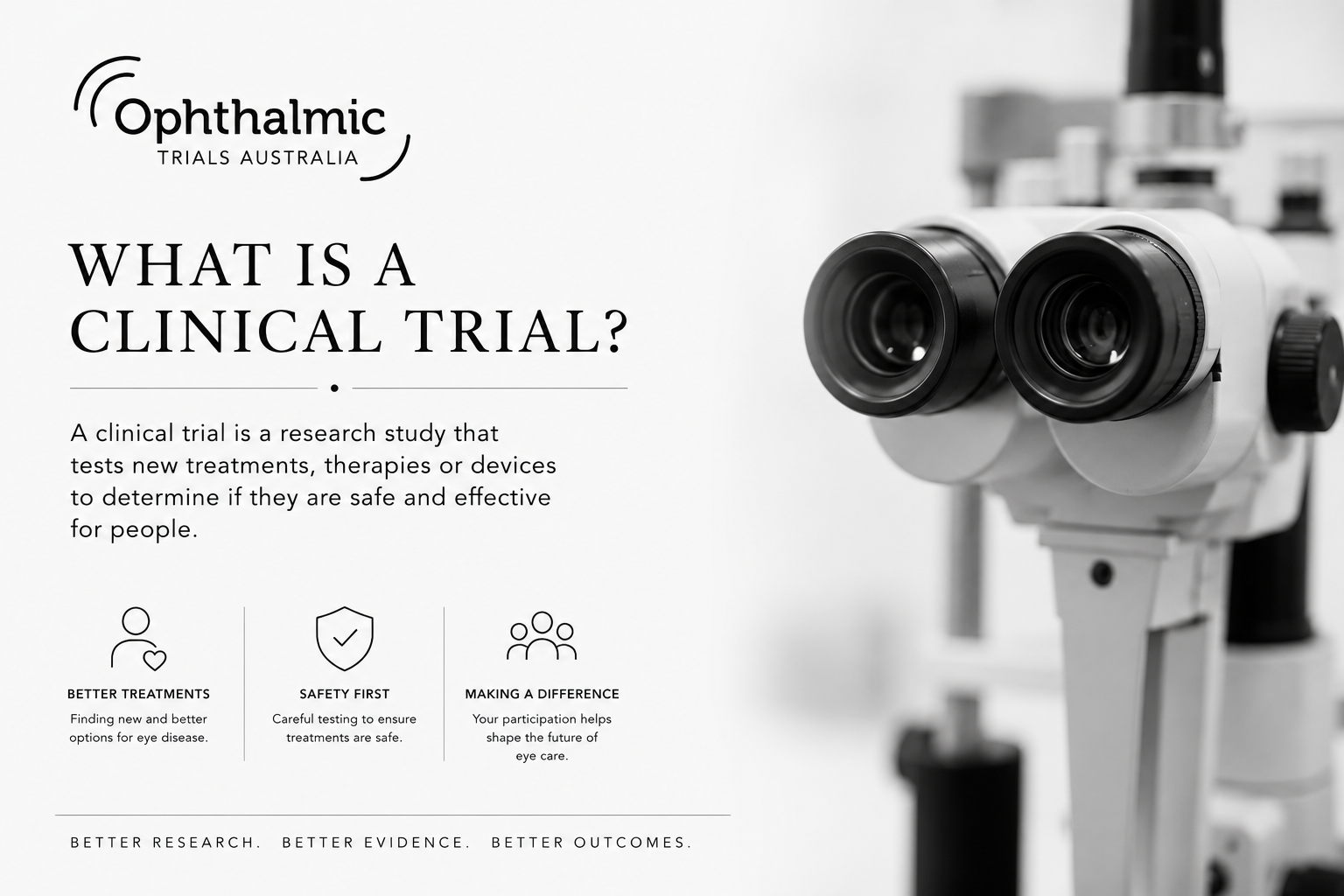
PHASES OF CLINICAL TRIALS
Our clinical trials through Ophthalmic Trials Australia are Phase 1 through to Phase 4 clinical trials where after ethics approvals we conduct a series of tests on a smaller populations on early Phase trials (10-20) and larger populations on later Phase trials (50+). We have completed therapeutic, non therapeutic and investigational device clinical trials. As a rule, most pharmacological and biomedical interventions for clinical trials follow from Phase 1 to Phase 4 as per:

Tests a new drug or treatment in a small group of healthy volunteers or patients with eye conditions to evaluate safety, determine a safe dosage range, and identify side effects.

Involves a larger group of participants with the targeted eye condition to assess how well the treatment works and to further evaluate its safety.

Conducted on a much larger group to confirm effectiveness, monitor side effects, compare with standard treatments, and gather data to support regulatory approval.
Takes place after the treatment has been approved and marketed. It collects ongoing safety data, monitors long-term effects, and may explore additional uses.
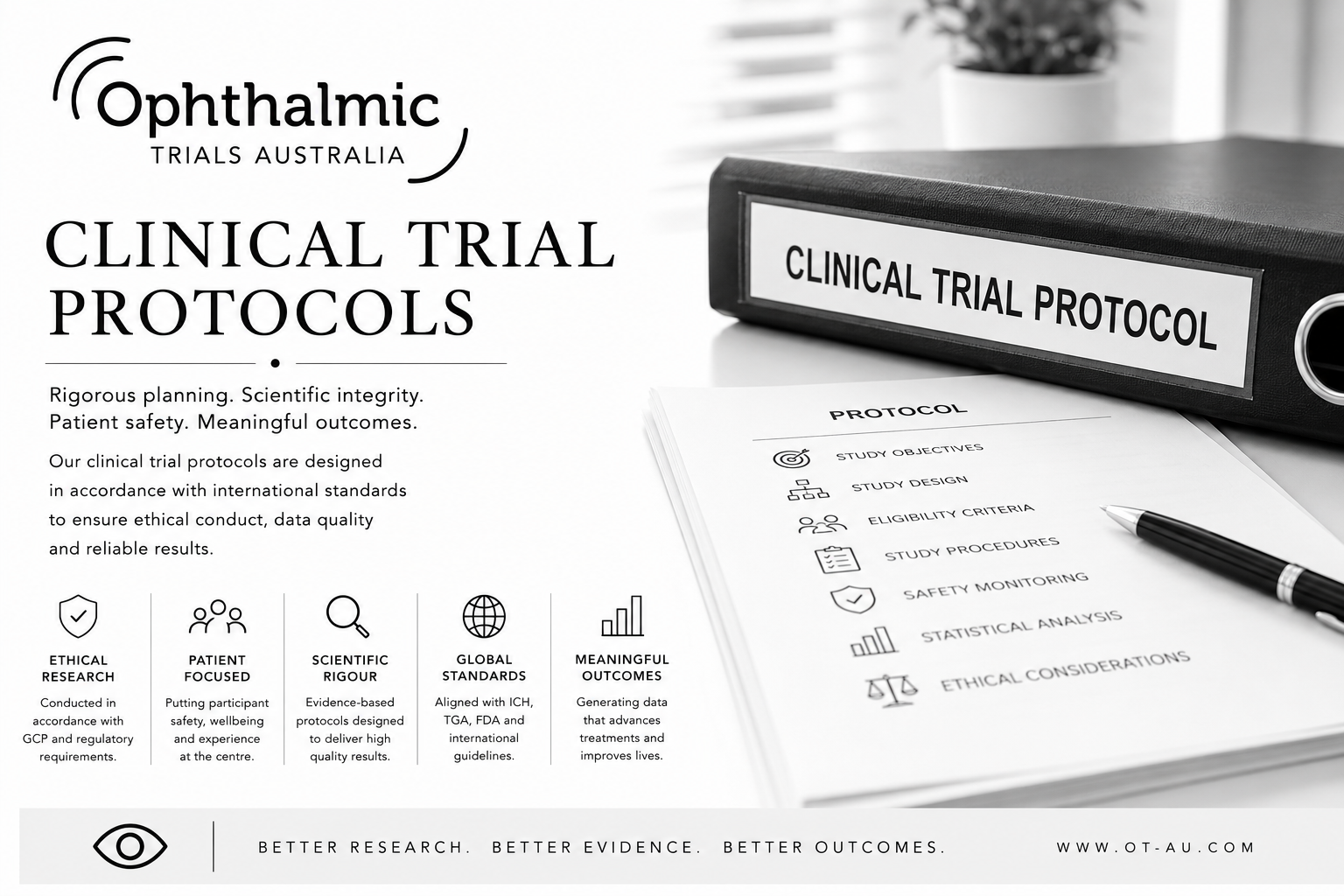
CLINICAL TRIAL PROTOCOLS
Clinical trials follow a plan, or set of rules, known as a protocol to ensure that they are as safe as possible, that they measure the right things in the right way and that the results are meaningful. For example, a protocol describes:
- Who is eligible to take part in the trial?
- The research methods, tests and procedures that will be used?
- The interventions that will be used and how they will be delivered?
- The length of the study, what information will be collected and any follow up?
WHY PARTICIPATE IN A CLINICAL TRIAL?
Read More

QUESTIONS TO BRING WITH YOU TO OUR CLINICAL TRIALS
Clinical Trials can often be confusing, it is accepted and encouraged for you to bring any questions you may have. if you would like to, please email us at tracey@ot-au.com to express interest and any questions you may have. A list of commonly asked questions are (Click read more to find out the answers):
- What is this study trying to find out?
- What treatment or tests will I have? Will they hurt? Will you give me the test or lab results?
- What are the chances I will get the experimental treatment or the placebo?
- What are the possible risks, side effects, and benefits of the study treatment compared with my current treatment?
- How will I know if the treatment is working?
- How long will the clinical trial last?
- Where will the study take place? Will I have to stay in the hospital?
- Will you provide a way for me to get to the study site if I need it, such as a rideshare service?
- Can I do any part of the trial with my regular doctor? Is there a closer clinical trial to me?
- How will the study affect my everyday life?
- What steps ensure my privacy?
Medical Care
- How will you protect my health while I am in the study?
- What happens if my health problem gets worse during the study?
- Can I take my regular medicines while in the trial?
- Who will be in charge of my care while I am in the study? Will I be able to see my own doctor?
- How will you keep my doctor informed about my participation in the trial?
- If I withdraw, will this affect my normal care?
Read More
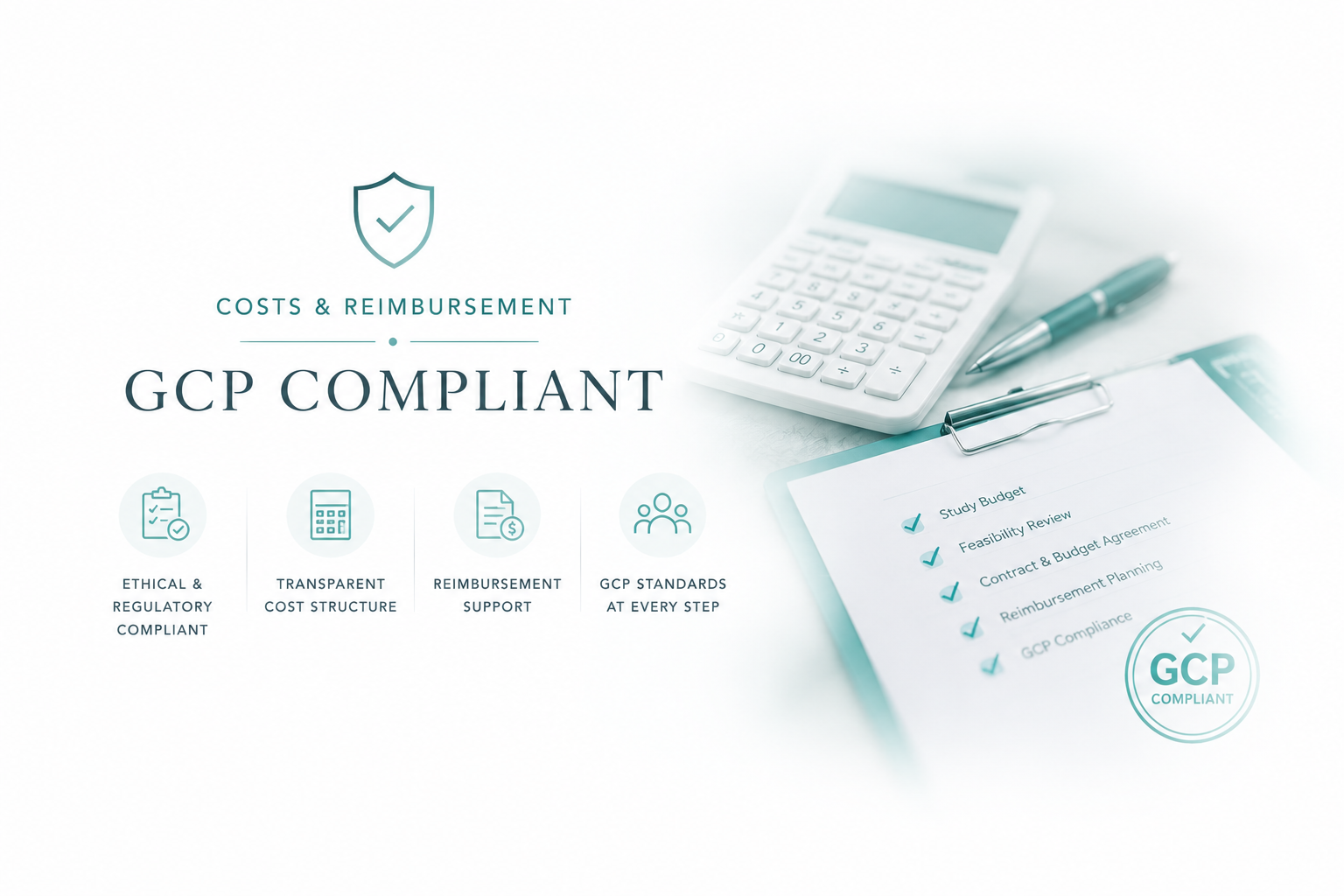
Costs and Reimbursement
- Will being in the study cost me anything? If so, will I be reimbursed for expenses such as travel, parking, or lodging?
- Will my insurance pay for costs not covered by the research trial, or will I need to pay out of pocket? If I don’t have insurance, am I still eligible to participate?
- Will I need a study partner? If so, how long will he or she need to participate? Will my study partner be compensated for his or her time?
After the Trial Ends
- Will you follow up on my health after the end of the study?
- Will you tell me the results of the study?
- Whom do I call if I have more questions?